





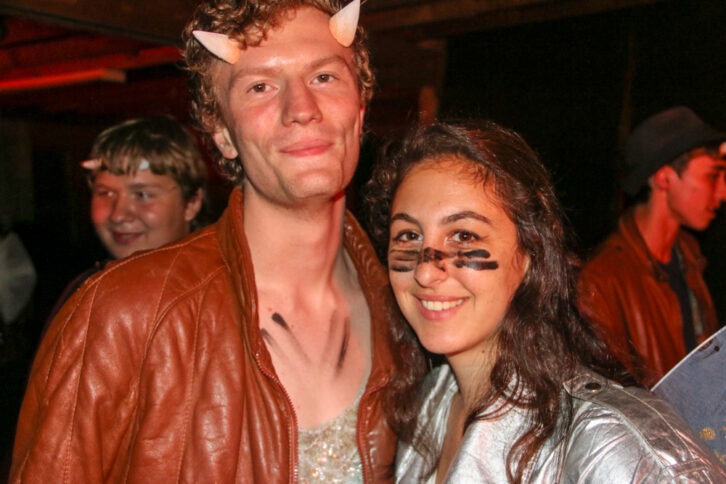
 It’s no secret that sometimes our staff meet their person at camp. Two summers ago I, along with many other community members, had the pleasure of attending two long time staff members’ commitment ceremony, which was a truly magical celebration of the playful love these two have. They navigated working together, long distance, and competitive natures to find themselves here. And now they’ve moved across the country, Deanna taking on a full time position with us and Mike playing up a storm of percussive music. So of course I start by asking: If you needed to be summoned, what three objects would someone need to ritualistically summon you?
To which Deanna replied: “Number one, of course you would need a frisbee, because I would be so excited to come and chase it down. Number two would be a bottle filled with air from like a warm sunny day that had been captured. And number three would be some dark chocolate.”
And how to summon Mike? “I think you would need a pair of drumsticks.
It’s the obvious one. I think you would need a book, which might make it hard to summon me, because you’d need to find a copy of whatever book I was reading at that time. And then you would need a small vial of rain water that fell on a day in which I did not have to go outside. Because I love a cozy rainy day.”
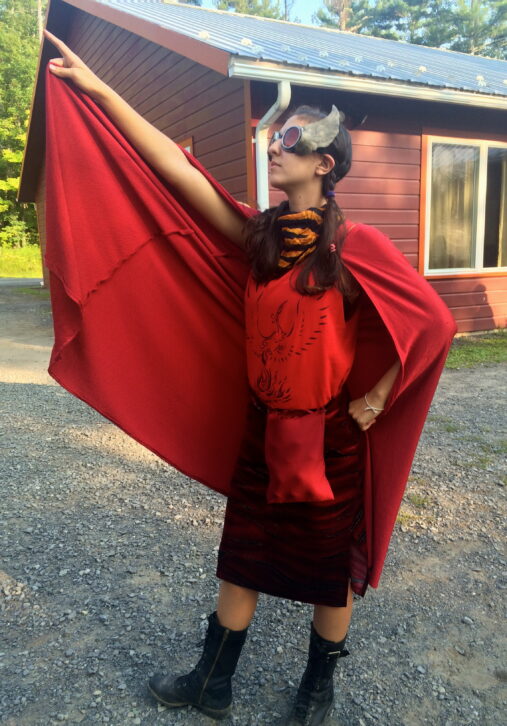 They both started their Wayfinder journeys as campers and, weirdly enough both heard about camp through a cousin, though they never went to the same camps. Deanna’s competitive spirit brought her back year after year to play harder and try each new level of involvement (community leader, apprentice, staff, summer director). Whereas Mike savored his sword fighting time as a camper, only apprenticing when he was 18 because his friends told him too. Lo and behold, those same friends didn’t come back, and if it wasn’t for Mike’s steadfast nature to follow through on his apprenticing commitment, we would have lost him, but those two weeks apprenticing found him making new amazing friends and finally coming back for the community.
The two finally met at Staff week 2013, where they became friends, and they worked together, a lot, the following summer when they fell in love. Neither living near camp or near each other made camp a very special place where their relationship flourished (after hours and off campus, these two are very professional). “I love people who are motivated, who are good with kids, are exciting to be around, love fun and games, and don’t take themselves too seriously, and all that stuff was on full display.” Deanna said, while they were working at day camps. And they didn’t let their feelings make things complicated at camp, Mike felt that “working with Deanna has always felt really really really easy.”, thanks in part to the soft skills they learned at camp, such as how to really listen to someone, how to see from one another’s perspectives, and how to hold space for big feelings. Skills they both also use in their other careers.
Deanna has always been a passionate person and learned to follow those passions into a number of amazing jobs. As a kid she loved math and science which led her to a degree in physics, which was “very fun, very interesting.” After a couple of years working at a quantum computing startup doing quantum engineering (“which was really cool”), she was ready for a chance to follow her new passion, combating climate change. Having picked up some software engineering (noting that quantum engineering skills didn’t transfer well), she decided to find a startup that needed software engineers to work on climate tech. That’s how she ended up at her last job at the time of this interview. Deanna was working remotely as a senior software engineering manager. She led a team of software engineers, however most of the work force at the company were chemists trying to do something pretty cool. “They are trying to use chemistry to turn carbon dioxide into carbon monoxide and then carbon monoxide can be used to make a bunch of stuff like jet fuel or other consumer goods that are being made. The tagline is Made From Air. So more carbon neutral or even potentially carbon negative products. We’re still a startup. We’re still in the prototyping phase. So this works in the lab. We’re trying to make it work at a scale where it is useful to anyone and fingers crossed that that goes well.” And now, lucky for us, her passion for working with kids has led her to take a full time position with us.
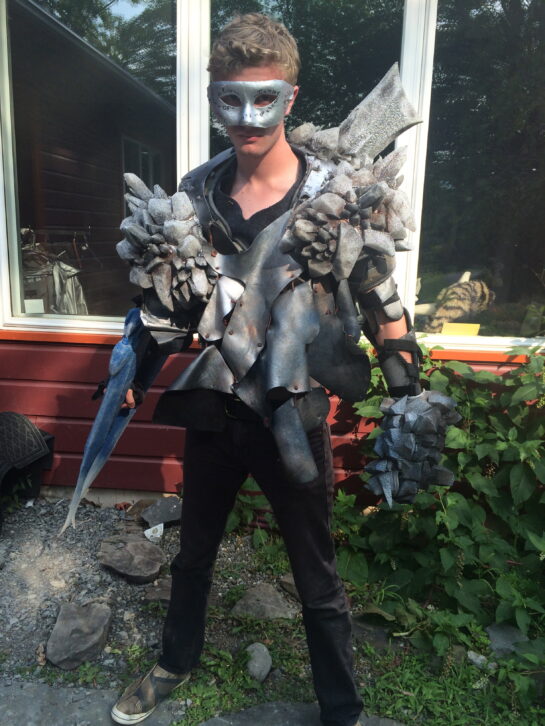 Mike graduated from grad school with a doctorate in Musical Arts in 2024. “I’m a percussionist by trade. So nowadays I am teaching.” During grad school there wasn’t time for much else, so Mike is finally getting a chance to breathe and see what new jobs and hobbies might come his way. He started this year off touring, playing music and teaching master classes at Bard and other universities along both coasts. He specializes in modernist music. “For those who don’t know, modernism was this artistic period in the late 19th century up until the late 20th century.” He goes on to describe his feelings for the music, “I think it is quite beautiful but [the music] does not care if you think it is.” Finding that fascinating in college he went to grad school to work with Steven Schick at UCSD who is a leading modernist percussionist in America. Mike has found that many skills he honed while teaching at camp he still uses. “I think that the biggest, most practical one is how to hold space and how to hold the attention of a room, especially when teaching or directing ensembles. I had someone ask me how I became such a good teacher one time” to which he said “it’s because I had to do it with 58 eight year olds in Woodstock in 90 degree weather.”
Wayfinder also helped Mike in other ways. “Wayfinder had a big impact on my development of empathy as a young man (biologically speaking). My gender has transformed as a result of knowledge which came from Wayfinder as well. The ability to communicate empathetically, the ability to think about other people’s perspectives came from the programming we do.” Deanna also notes these skills and more as useful in her life and work. “In my career I have run a handful of team bonding retreat days where we have icebreakers and we have trust workshops/team building.” So she has made play-maps and plotted out ways to have her work teams feel closer in a trusting and safe environment. “That’s just running a camp workshop for adults, a hundred percent.” Through her work, she has also been made to go to manager training which feels wild because “ these are skills that we’re teaching 11 year olds at camp.” These types of skills sadly can be lacking in the school system; and while they are often taught at summer camps, we bring it to another level at Wayfinder. We teach “how to be an active listener. how to create and hold space for vulnerability and how to receive vulnerability and respond to it in a positive and constructive way.”
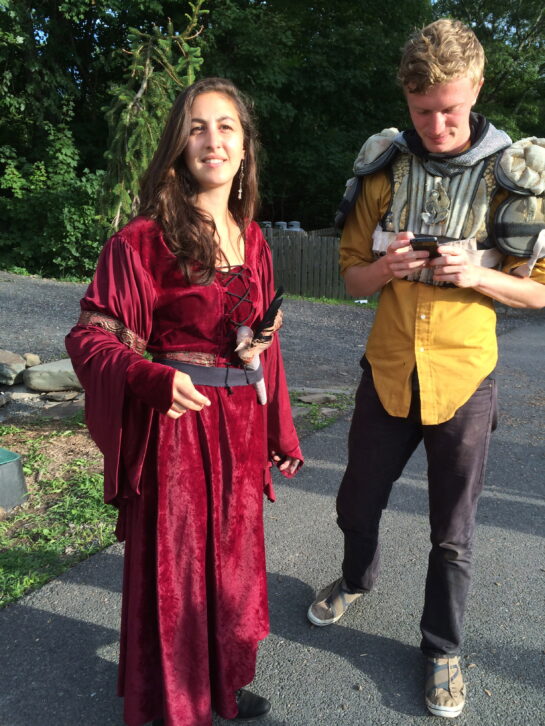 This ability to hold space and really listen is at the heart of everything we do at camp. To be able to be playful, to be able to tell when it is ok to push a little, is a skill we are all working on fine tuning. When these two get into Adventures Games they are no stranger to reading these cues. They both told me fun stories of how they will invite play with each other while in character. They are both very comfortable with their competitive spirits and with one another, so they can use competition as a form of play as well. While playing Golden Blade, a player vs. player Adventure Game where teams got points by killing monsters and completing quests, Mike saw Deanna, who was on another team, sneak into the woods. Mike sent a teammate after her and within a minute there she was walking past him wearing a spirit costume as they exchanged knowing looks of “you got me.”
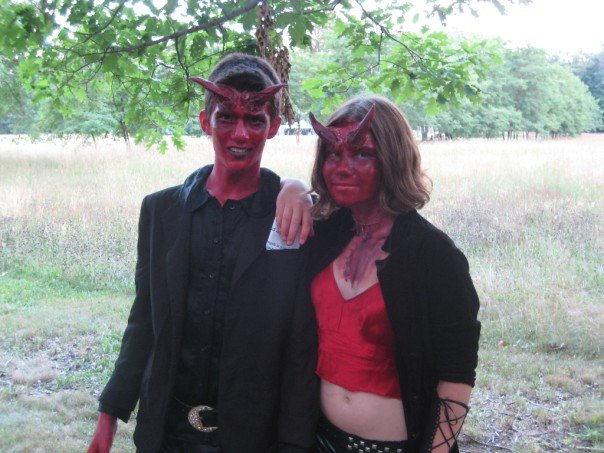
Deanna’s story was from The Interstate, a horror style Adventure Game where a small town gets visited by demons. She was playing a mother with a family and found herself confronted by demon Mike giving her the choice of which family member he will kill. She had led a bunch of players, playing as a baseball team, to the scene, and they were waiting outside of the small cabin while Deanna had to make her choice. “My favorite moments in Adventure Games are when my character surprises me, Deanna, and I’m like, oh, that felt like a decision someone else would make, or like a reaction someone else would have, or I didn’t know that I was capable of that.” In a panic and in character Deanna said what she thinks is one of the worst things she has ever said. “There are children outside. Take them instead” Luckily demon Mike didn’t take the kids and took her pretend husband instead. “It was my darkest moment. And my character had a breakdown thinking ‘I can’t believe that just came out of my mouth.’ And out of character I was thinking ‘I can’t believe that wasn’t premeditated.’ That wasn’t to make the scene better. That was just a desperation thing.” However, out of character, Deanna doesn’t think she would make that same choice should our town suddenly be overrun with demons.
 That is what LARPing is all about for us at Wayfinder, learning about yourself while trying on different mindsets. Growing your understanding of others and the world through facing challenging choices. And learning when, how, and why to fight. A big thanks to these two for sitting down with us and being such instrumental staff in their own ways. Wish them joy and luck settling into the Hudson Valley.
Written by Trine Boode-Petersen from an interview in 2024
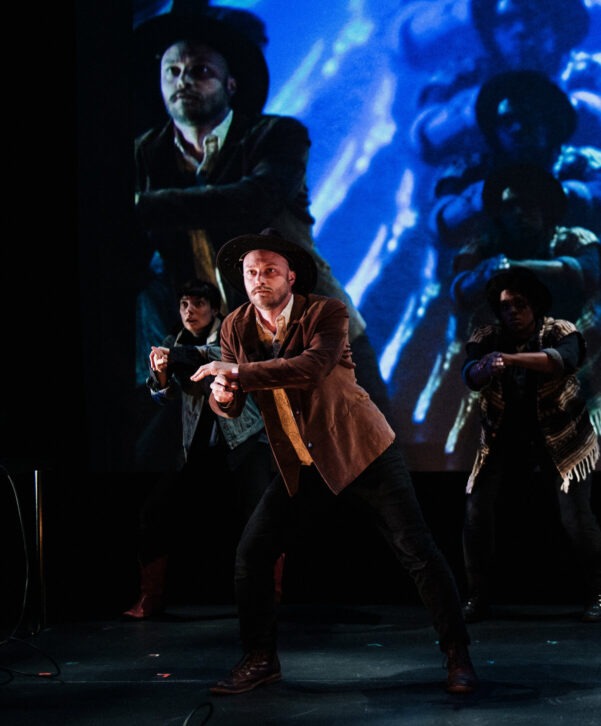 It is often the case that when young people are given time, autonomy, and a safe environment, they are able to discover who they are, what inspires them, and what it is they want to do. At Wayfinder, we try to provide these opportunities that can be fundamental to a young person’s development. Andrew Murdock, a theatrical puppet and video artist, attests to this experience. At age eleven, Andrew started attending our predecessor camp, Adventure Game Theater, where he fell in love with crafting. His first camp was a “specialty camp” relic where campers made everything for the Adventure on site that week. Andrew picked the crafters group, making weapons and props for the game, and never left. One of our most prolific crafters, Andrew was an apprentice and staff for years teaching his skills to many of the crafters still working today.
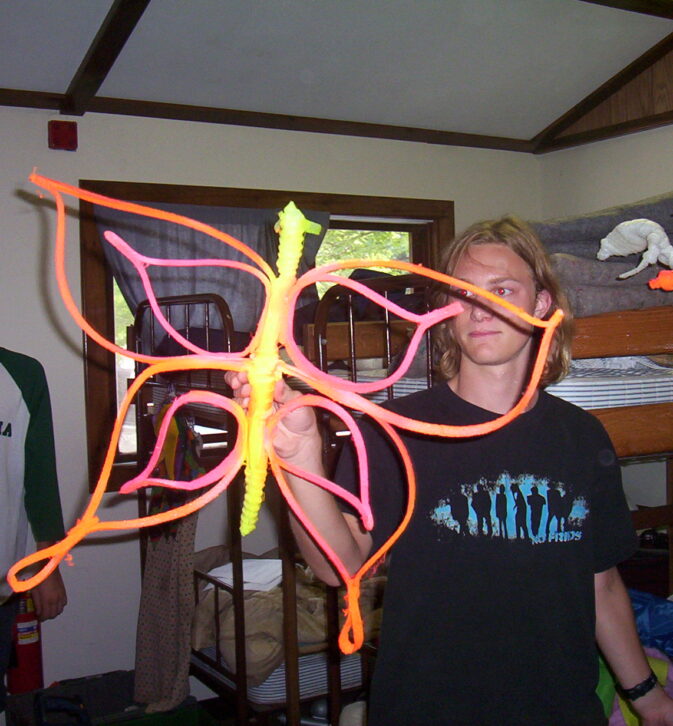 As a free-lance artist and teacher, Andrew’s gigs bring him all around, performing in NYC, teaching college courses, and helping out at a local theater near his home in the Adirondacks, and he still uses this quick and dirty approach. “It’s an intro activity that I do in intro to making puppets because it’s always 50% making and 50% performing. I throw out a bunch of wire and tape and scraps of cardboard and make them make something very quickly by passing it around collaboratively.” Another way Wayfinder has influenced Andrew’s teaching style is teaching him how to meet people on their level. “In any sort of facilitated or creative class, you can’t force it. You have to meet people at their level, but you [as the teacher] need to take a chance and be goofy and fully commit to whatever the activity is, that is going to inspire that same thing in the participants.” He uses this approach because he believes “playing and experiencing are the greatest teaching tools. That’s how you actually learn.” He strives to make his classes a place for creativity to thrive. “I think what I gained from Wayfinder is that the process is the most important. It’s not about trying to get a result. It’s about inspiring creativity. And I think that that happens in almost every Wayfinder camp to some degree because it’s just about setting the stage, making sure everyone is heard, respected and listened to. And then once people feel like they are in a safe, loving, and nurturing community…, then creativity is the natural next step. Once everyone is committed to that experience, that’s where the magic happens.”
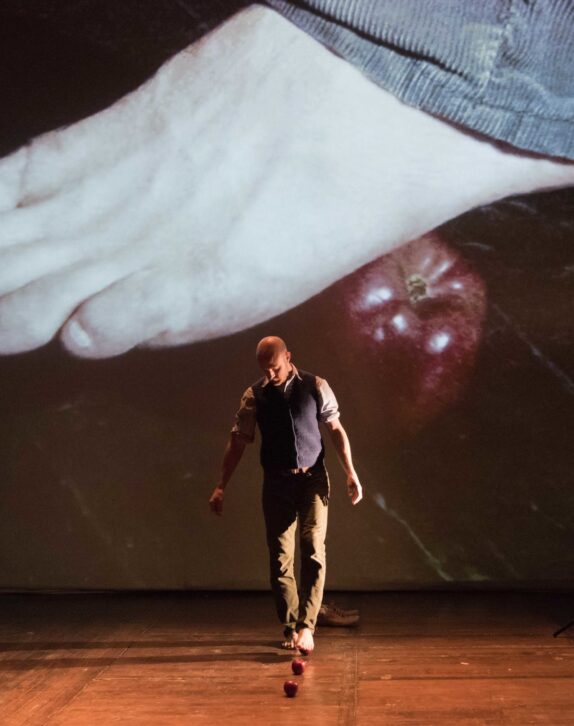 This magic – the ability to pretend, play, and take chances, and then by extension grow our understanding and empathy for others and the world – is something we all can find, but sometimes we need models of play and support to really access it. Andrew describes being an eleven year old, pulling up to camp for the first time, seeing the adults around him play: “I was like, ‘This is bananas.’ And also this is my dream, having a whole bunch of people play an elaborate game of pretend. Being a shy and awkward child and teen, the confidence you gain from pretending to be other people is so exciting. But the key is making the space as safe as possible for young people. Having that space held for you to be a nutcase or be a weirdo or be a goofball, to have that space for you to explore your identity through being other people, I feel is invaluable.”
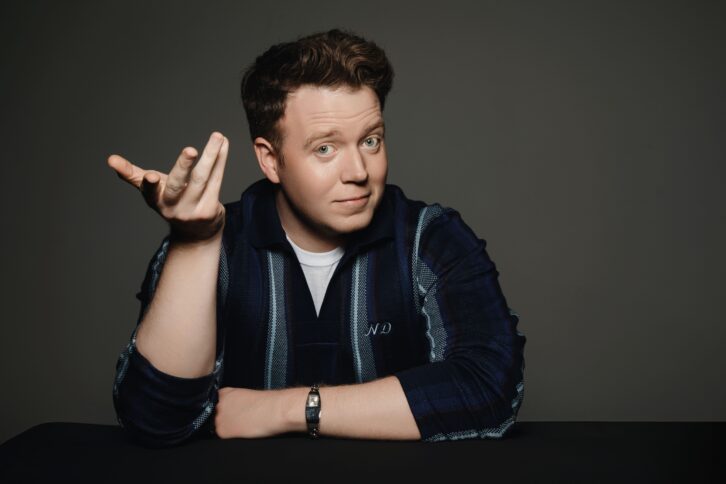 We last chatted with Brennan for the blog eight years ago, and since then things have really popped off. For those who don’t know (though it’s hard to believe anyone drawn to our camp wouldn’t), Brennan is the creator and executive producer of Dimension 20, which is an actual play tabletop RPG show, as well as a performer and cast member on the streaming service Dropout. And he’s great at it! He and the Dimension 20 team have had an extremely successful tour of the US and UK, and recently SOLD OUT Madison Square Garden! He can hardly believe it: “It’s nuts and that’s my job,” he told us, but we really don’t think so. We knew Brennan was going to do amazing things.
 Brennan has put so much into this community, but he often attests to much he’s gotten out of it as well. He was the Story Overseer at our Advanced Camp many years ago where we ran five Adventure Games in twelve days. He helped the other four writers get their games on their feet, as well as his. This task gave him a great place to jump off from for his professional career. “The fact that by the time I was in my twenties, I had what felt like a centered and stable emotional relationship to working very hard and fast on something creative and how to not be precious about your creative self. Like, game is gonna start Wednesday night come hell or high water. So you need to stop thinking of creativity as precious, it’s not a little feathery thing that dwells in the soul. It is the craft of getting the work done and making it as good as you can with the time and resources that you have. And I think that that is a very welcome gift to anybody that wants to pursue creative endeavors of life.”
 “My first staff game,” Brennan told us, “was a zombie horror game. I remember being deep in character and moving around. It was one of the first times that I wasn’t being led around by a PC leader. I was walking down the road and I had a flashlight on ’cause I was walking in the dark and I needed a flashlight to see. As I had this flashlight on, I heard zombies down the road. They run up and a lot of people [playing zombies] just jump on me and kill me. And I remember thinking, ‘oh, I had my flashlight on.’ I was totally visible from everywhere. I think that there was a moment of growth. I was like, ‘oh, even though the light is comforting to me, it’s gonna kill me. And for me to be safe, I have to push, for me to be actually safe, I have to do things I’m uncomfortable doing. Even though it will frighten me to be in the dark, I’m actually safer in the dark than I am with this flashlight. Things that feel like safety sometimes are not safety, and things that feel dangerous are sometimes the thing that is going to save your life.’ That was a moment of viscerally learning as zombies tackle me to the ground and eat me.”
 The rest, of course, is history. But still, Brennan says that, although he has more resources on Dimension 20, it feels a lot like working at camp. “The conversations always stay the same. The resources of Dimension 20 are very different from the resources of Wayfinder circa 2009. You are always going to be creating at the edge of your ability. I have never experienced an amount of resources making a creative team go, oh, we can relax. That’s not how it works. The resources come in, add quality, add energy, add an expansion of your ability to accomplish something. So when you get resources, like a gas, you just expand to the edge of your resources and are once again battling the limitations of what it is you can do. So to be honest, the emotional experience of jumping into the resources of Dimension 20, it feels identical to Wayfinder.”
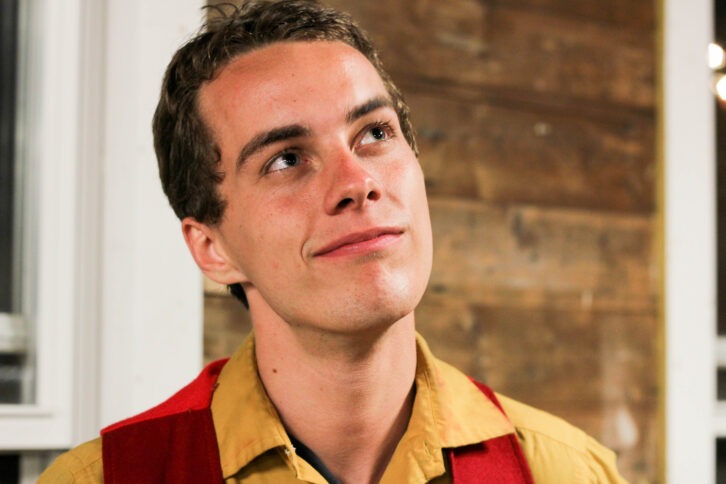
 We talk a lot at Wayfinder about the program building confidence in young people, but sometimes young people come to us already full of it, and we get to reinforce it, letting them know that no matter what the world might say, they should keep shining! Roy is a great example of this. When he first attended camp it was with a crew from California who flew in. It was clear that these teens had already built an amazing support system with one another, having all pitched in to pay for Roy’s flight. They were all already hooked because they had attended Westfinder, an informal Larping offshoot that another camper in CA started. So it is no wonder that he became an apprentice the next year, and staff the year after. Roy was a core staff member for 5 years, and occasionally worked here and there after that. Roy is a prolific Adventure Game writer who has proved able to take the Game experiences he had and give them back in new stories to campers.
 This feeling led Roy to start writing Games, feeling inspired by a horror game he also played that summer. “I had such a visceral and exciting experience in “Perfectly Normal Game”. There’s the section right before everything gets really real in that game. We were all moving in this long line of summer camp kids and my friend’s character, who had twisted their ankle, was on my shoulders. We were going back to the main space, we were kind of freaked out, someone had showed up covered in blood, but we didn’t know anything was really happening yet. Then the human hunter factions start running us down the line and killing people. It’s dark and very chaotic and everyone’s screaming. I remember one of them running up behind us and on instinct I pushed my friend forward, to get to safety, it wasn’t a conscious decision of “you go ahead.” It was simply reflex and then I got immediately killed.” Though moments like these sound very scary, it is also where the magic happens, since all the attackers are just our friends helping us push the limits of pretend. “I learned how I would behave in that moment under total instinct. Because I wasn’t thinking ”my friend is now going to pretend to kill me with a foam machete.” I was thinking “this person is going to kill me now.” Horror games teach you about yourself and your reactions to danger.” Roy wrote “The Wild Hunt” the following year, another one of the best horror style games Wayfinder has run. “It’ s incredibly empowering as a 17 year old to see a creative project through to fulfillment like you do with Adventure Games. Also having a whole group of very talented, creative, awesome people working together and spending an enormous amount of blood, sweat, tears and time to make the thing that you came up with; it’s really amazing.”
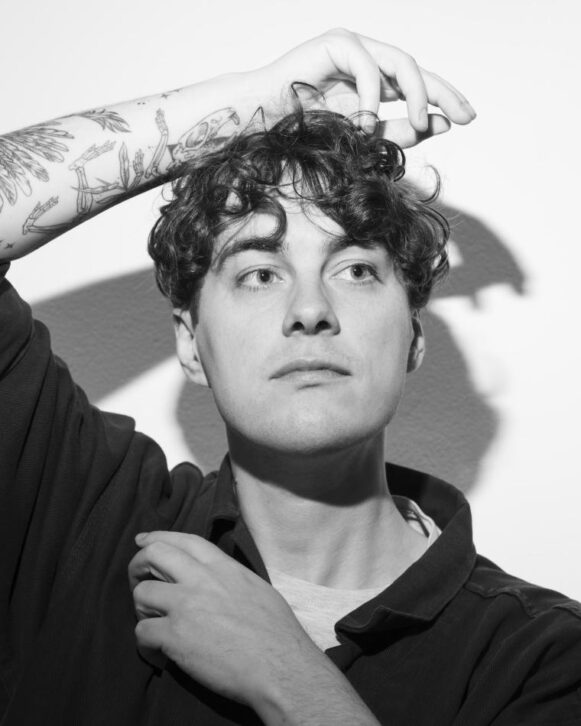 While working as staff at Wayfinder, Roy received his Bachelors in creative writing and then his Masters, though he did try out some odd jobs in between. “I moved to LA to work for a game journalism website and that fell apart. Then I got a job for Nexon, a mobile game publisher.” All the while continuing to write on his own time, applying to tons of other jobs and grad school. One of the positions he applied to was at Wizards of the Coast (WotC). Not hearing back from anyone, he took the grad school opportunity, and graduated in May 2020 (during lockdown). When WotC finally did get back to him, they wanted to interview him, but he had already moved across the county for school, so he simply said “I hope you keep me in mind for the future.” And they did! He is currently a designer on the Magic: The Gathering World-building team. “Obviously Wayfinder encourages a very robust imagination and a creative life, which I use all the time. I think that writing an Adventure Game is very hard and requires you to use things other than a strictly creative muscle to plan out and map all the things that will be happening, and what the player’s motivation is to go to the next place. That sort of process is very comparable to the process of writing fiction.”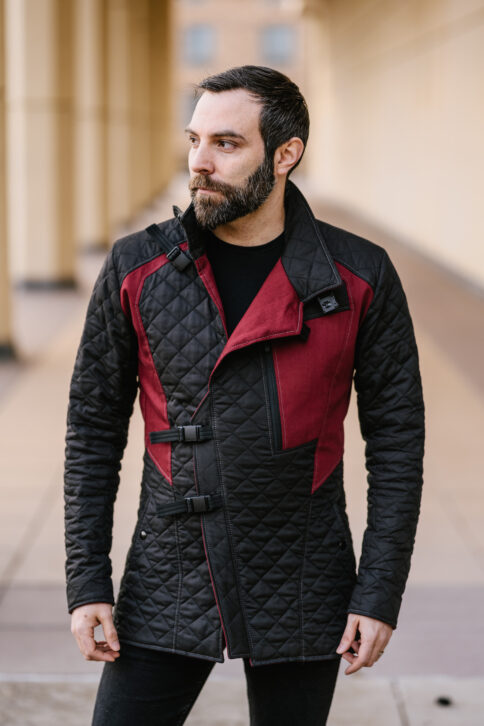
 Like many of us, running a business is not what David set out to do, but life had other plans, so he just ‘went with the flow’. “I went to college for animation, so I wasn’t planning on getting into fashion or having a clothing design company or anything like that. I thought, ‘Where did this come from?’” He goes on to say that he ran into a Wafinder founding member at a convention, which was where Volante got its start. “I was like, this is it, ‘isn’t this crazy? Who would have guessed that I would have had a fashion company like this?’ And he’s like, ‘I would have guessed that you had a fashion company like this; it makes sense 100%.’ And I realized, ‘Oh, it does make sense 100%.’ I had thought it was sort of completely out of the blue. I hadn’t made the connection that everything that I did at Wayfinder tied directly into what my professional career ended up being”
 The entrepreneurial spirit was always within David, a graduate of Hampshire College, where he LARPed and ran programs on campus every week for four years. He would get people to join in the fun the same way he gets people to try on his clothes at conventions. “I’d just hand this sword to them and they’d be like, ‘Sure, I’ll take that sword. Why not, right?’ And then I’d fight them.” Whereas at conventions he will “size them up and just pull something off the rack and hand it to them. My ideal, like my best sales tactic, is not to say a word.” It is an offer to play, a way to say you are allowed to try this on, in fact I encourage you too.
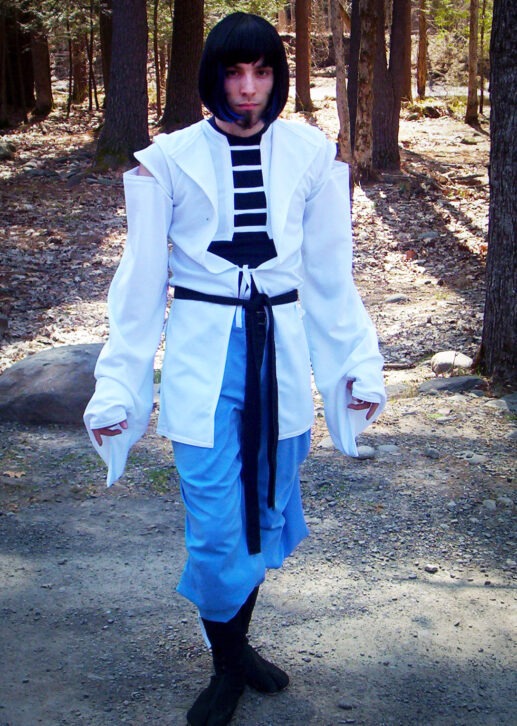
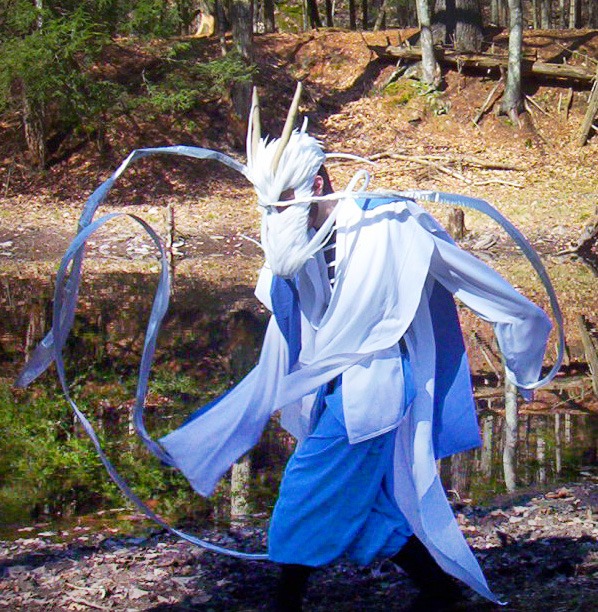
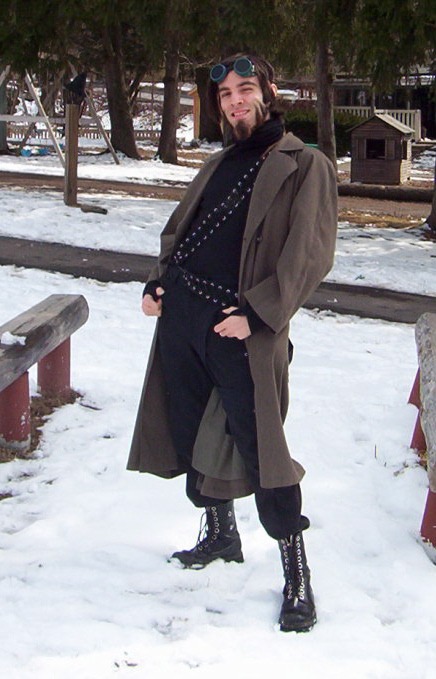 At the heart of Volante Design is empowerment, just like Wayfinder. LARPing gives us chances to do things that we might never do in our real lives. “I feel like most people at some point while at Wayfinder get this feeling of ‘yeah, I was a badass, I was in a fight and I had a sword.’ Most people don’t have the opportunity to feel badass.” But with David’s clothes they do. There is one moment in a Wayfinder Adventure Game that David recalls as very particularly badass. It was in a game called Secret Worlds where players could be any character from any fictional world. “I was Kohaku from “Spirited Away”. I made myself a cool costume, and a second dragon costume was carried in a backpack so I could transform.” For those who are unfamiliar with Spirited Away, Kohaku is a river dragon who can turn into a boy. David was on his way to the final battle and there was a line of people walking a small piece of land between two bodies of water “I wanted to head off the group and protect them, because that felt in character. But I was behind the group and I wanted to get in front, so I transformed into a dragon (which no one had seen yet) with this long white tail trailing and I sprinted and I went around the group and through the water, but my shoes didn’t get wet!” Afterwards, Brennan (check out our blog posts about him) had noted the same thing. “He was like, ‘you ran on water’ and I was like, ‘that’s very cool. But he was like, ‘dude, for real, that was the coolest thing I’ve ever seen because you actually ran on water around us.”
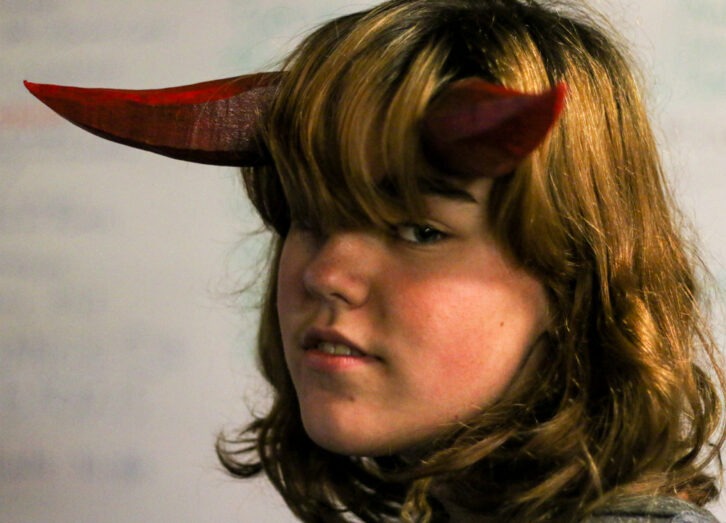 Finding your people, the ones that make you feel grounded and happy, is a huge part of life. Wayfinder, for many people, has been the place where they find their people. And that was just the case for Ruby, or as she is known around camp – Grub. “I met my long term partner, lots of friends, and my business partner at Wayfinder.” She started attending in 2004, first as a camper, then apprentice and ultimately staff member. She spent most of her time as a staff member in the production spaces, writing Adventure Games and serving as a member of our Story Board for years.
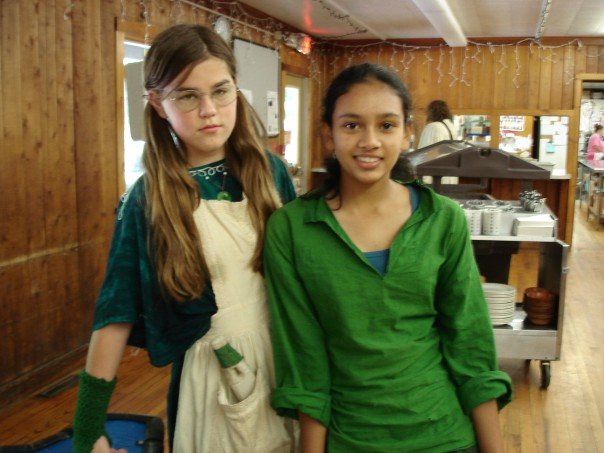 How does one prepare for the trials of running their small business, when you are the type of person who needs to make sure everything gets done? Practice, of course. Though some people have to wait until later in life for these opportunities to practice, Wayfinder participants get that practice in a low stakes and safe environment, which is running Adventure Games. Grub says, “I’ve been talking about this a lot recently. I ran my first Adventure Game when I was 14. It’s a crazy thing that we [Wayfinder] do to let teenagers run these games, because we put in a lot of time and money and people’s efforts and creative work and trust. But as a creative teenager, it is the most empowering experience that you can get.” And that is a huge part of why we do it! At its heart, Wayfinder is a place for people of all ages to feel empowered!
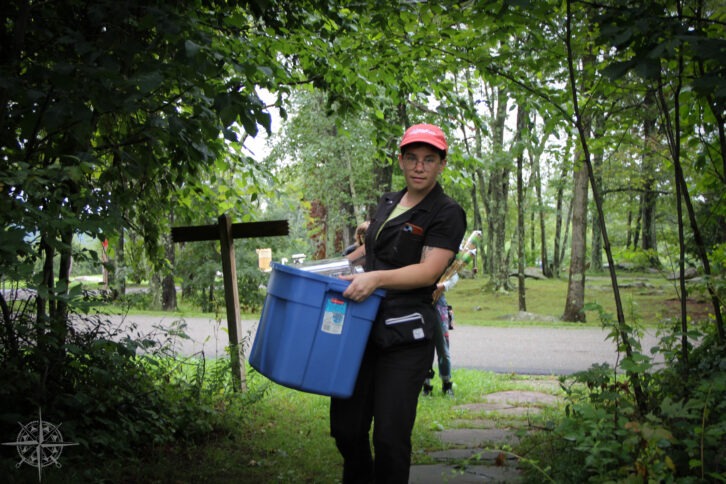
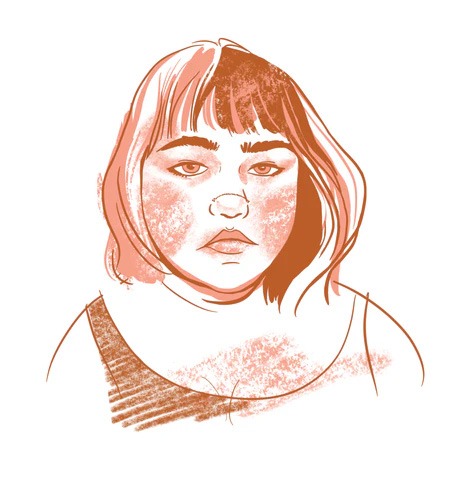 Though Grub has written a number of great games over the years, the Sets & Props department is her true home at Wayfinder. “As a graphic designer, I love to make paper props–I love to make scrolls and maps and posters. I also love to make a ritual scene that is just like rocks stacked ever so perfectly with candles, that’s really juicy for me. I love incorporating nature into the scene. When I’m going into the woods to build a scene, I don’t want to carry that much stuff–I want to maybe have one tote and then walk it out into the woods and add ferns and flowers as I find them.” Whenever she has free time she enjoys “arts and crafts. But that’s kind of a gimme. That’s why I’ve been a sets and props person my whole life. I also really like to cook and make little fanciful drinkies–I’m an alchemist!”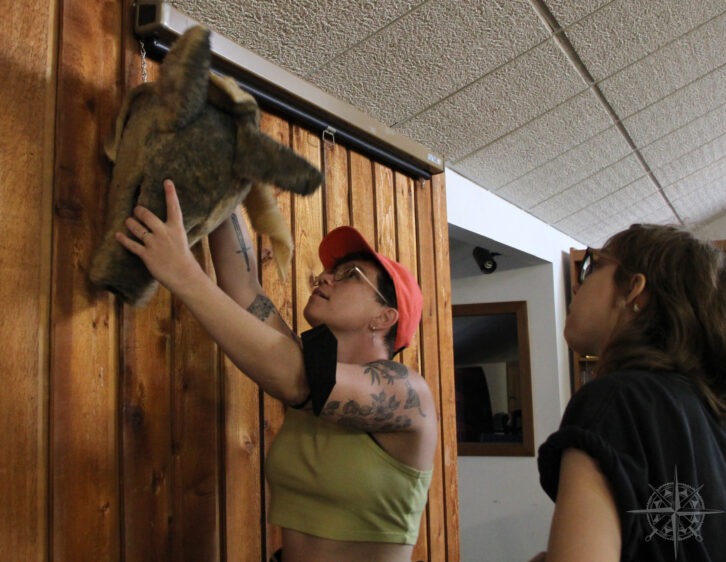
 She is striving for something important and magical with her work, something that many of our community members are also seeking: representation of their identities in the media. “Many of us queer people are just like, where are our stories? Where are the stories that help us explore our identities? That aren’t just about coming out of the closet or being oppressed in some way? There’s other experiences that people who are queer have that are unique and individual that are rarely explored in mainstream art. That’s what I’m really interested in with my work. And I’m always trying to find out new ways to talk about queerness and talk about queer love in all its forms: romantic, platonic, familial, self love, the complexities of it. There’s so much more than what we’ve been given.”
 Besides working on these amazing books, Molly worked for years as a show creator for a pilot for Disney that unfortunately did not make it to screen. Now that she no longer works for Disney, Molly has many other creative projects percolating and I’m sure we will see something new and exciting before long.
 On a more personal level, another big takeaway for Molly is something universal. “Having a place where you get to be yourself, even if it’s for one week out of the year – you then get to experience that. You get to learn about yourself.” And she has done the one thing we make sure to tell everyone to try to do out in the greater world which is, bringing connection and essence of play with you. In her life Molly has been working on doing just that. By asking “how can I make more places like this? How do you carry it? In-person spaces where people get to work together, care for each other and be joined by a common interest and a common passion are so powerful. It feels like [a] super power to be someone who knows how to organize an in-person event and knows the power of gathering people. It has a ripple effect on the rest of your life and the rest of the world.” And that is a super power we could all use in this world.
 This week’s entry into the Where Are They Now series is centered on Kyle Perler. While Kyle is another creative type who came through Wayfinder, he works in a field where the connection to the work we do may seem a little less direct. Kyle runs his own photography business. While his introduction to the world of photography came through his family, Kyle still credits Wayfinder (or Adventure Game Theatre where Kyle, much like Wayfinder, started his experience with LARP) with a lot of skills he uses on a day to day basis. “I have a career where I am often standing in front of dozens of strangers who want to be doing other things, and I have to make them do what I tell them to by loudly, clearly, and confidently asserting myself. That is something that I never would have been able to do had I not been given the preparation and courage, and also the ability to focus on the role I’m in. I wouldn’t have been able to do that without Wayfinder.” The career Kyle is talking about is the photography business he runs where he works for the city of Boston, the state of Massachusetts, and fortune 500 companies. He has also published two books. As has been clear in every one of these features, Wayfinder gives people the confidence they need to succeed in their respective fields. It can provide more than confidence though.
 The Wayfinder/AGT experience was just totally life changing. It really has not only crafted me into the adult I am today as far as how I know the world, how confident I am, how willing I am to approach new situations and say yes to things even if I’m afraid to do it, or even if it’s not going to go the way I want it to. Being ready to approach a new situation is something that is ingrained in who I am, and it is that way because of this camp. Not only that, but I am still so close to the community because of the bond that it builds with people. I have one friend from that previous camp, and I wouldn’t have reconnected with her if we hadn’t gone to the same school together. So far this year I have interacted with, spent time with, and seen about ten people that I went to AGT with because it really is a community. Because of the bonds that are created, and the environment that it’s in, and the people that it attracts, they really are people that stick with you and become part of your life, and they don’t just fade out when summer ends.
 While Nick talked a lot about the ways in which Wayfinder has helped him in regards to playing characters he has been cast as, he also went into the ways it has helped him in landing those roles. “There’s an absolute silliness in like running around being a merman. I had an audition where I had to play someone who was glitching, and I wasn’t afraid to do something that seemed silly or seemed totally random.” That kind of playful spirit is something that Wayfinder encourages (and something that Nick has always embodied with ease). The intersection between play and work (particularly work in a creative field) is something that we think about a lot at Wayfinder, and it’s something that Nick clearly picked up on. “What I learned about at Wayfinder was just that it’s ok, there’s no shame in playing, and there’s no shame in getting to explore a character as fully as you can, and also because you’re playing all these Games you get really good at improv, you also get an understanding of story. We played a lot of kind of archetypal Games and so I feel like having been parts of stories, it helps you tell them and see what really affects people.” The lessons that we teach (and learn) in Game and throughout the week are such a big part of the work that we do.

 The path from Wayfinder to the work our alumni do in their respective creative fields can often be an easy one to see. The connections between the work we do at camp and the work someone does writing, acting, or making art are all fairly clear. What is not always clear, but is incredibly important to remember, is that that path is not always an easy one to walk. Camp hopefully helps to prepare you for the difficulties you’ll find as you push forward, but just keeping in mind that you are worth it and have to keep pushing forward is something Tigre stressed heavily and wanted to make sure was in view with his story. He moved out to Oakland from Philadelphia six years ago. “I was teaching, and I was working as a barista, and I was in Philly kind of doing art, being creative but not really finding a flow and kind of stumbling through stuff. Then I moved out to California, and big part of moving was ‘I want to focus my life around making art, and I want to really do this and I don’t know how it’s going to go.’” After a number of years of struggle, having “different hustles” ranging from selling jewelry on the side of the street to working in cafés, Tigre has been able to find some success as a sculptor creating installations for festivals all over the world (enough success that he’s been able to leave behind the other hustles). “It was like this seems to be happening, and when I was doing other stuff it felt like I was wasting my time. When I was in the café washing dishes I was like ‘what am I doing, like I was just on the other side of the world making this huge art piece and seeing people respond to it really powerfully’, and eventually I was like ‘I’m just going to make art and live off that and see what happens and the first year was really tenuous and hard.’”
 None of this is intended to frighten any aspiring artists or to lessen Tigre’s successes (like constructing one of the main stages for the Envision festival four times now!) but as previously stated, he wanted to make sure it was included in the image we presented of him. That he has gotten to a place through a mix of talent, hard work, and a willingness to give his life over to his craft. “We create stories, right? That’s what human beings do. We take the complicated messiness of the world, and we shape it into a story with whatever we want to talk about. We simplify it in however we are focusing in that moment. So it’s common to have this mythology that if you have a lot of talent and passion eventually you’ll just get it, and actually it’s really hard, it’s really scary, and it involves a lot of trust.” The work that Tigre has put in really shows through. He’s always been an incredibly talented artist. We were lucky enough to have him in our sets and props and costuming departments (and workshop; anyone who ever got to be in a workshop run by Tigre was in for a treat) and some of the things he created are still marveled at today. Maybe even looked at with a little bit of jealousy or envy, something natural when encountering talent in your own field. “For myself that’s something I really struggle with. I see somebody else, and they’re so successful and so talented, and I’m like ‘if I can’t get there that must be a flaw of my own.’ The system is so set up against us to succeed in any really soulful, meaningful way. It’s possible, but it’s hard, and I think it’s helpful to know that everybody goes through that stuff. It’s a long, treacherous adventure, you know?”
 The work that Tigre is doing now has me as much in awe as the work I watched him do when I was a child. He freely admits that it is all closely related, “I used to build sets in the woods out of fabric and sticks, and now I build sets in the woods out of fabric and sticks.” While that may describe the work itself, Tigre is fully aware of what he is really doing in both instances, and that’s creating worlds for people to explore and escape into. “When you have these moments where everyone has agreed to share these imaginary constructs, and you have moments where that becomes real, where we really are teleporting elves that are stopping demons, that is a transcendental experience. We have transcended the normal shared imaginary construct to go into this other shared imaginary construct, and that is in essence the goal of what I do now.”