




 Donate to the Jasmine Fund
My name is Jasmine. When I was 7 years old, I attended my first week of summer camp with Wayfinder, which was also my first experience with live-action roleplaying, a form of improv theater I immediately fell in love with. It was more than the programming that struck me profoundly, but the community that had risen around it. I was quickly welcomed by the other campers and staff, and in the past decade have grown alongside them into flourishing members of the community. I have made many deep bonds here, from friendships that will last a lifetime to lessons from mentors I will carry with me forever. Wayfinder has taught (and continues to teach) me how to live openly as myself, and how the power of play and exploration shapes us to approach the world with a mindset eager for opportunity.
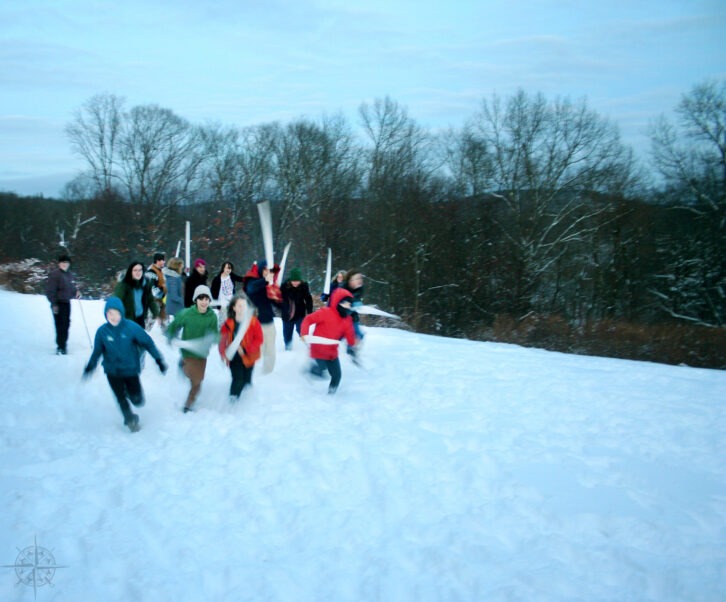 As a child with Cystic Fibrosis, an unfortunate amount of opportunities in life have been closed to me due to the effects of my condition. Wayfinder, however, since my very first time as a camper, has always made an effort to accommodate my situation as much as possible. They have consistently worked to keep all aspects of their programming open to me, and despite being quite a physical camp, I have never felt incapable of participating in it. This is what really drew me in, as its wonderful community bands together to make sure no one is left out, and that everyone has a place amongst us. I haven’t found the same level of camaraderie at any of the other camps I’ve attended. Wayfinder is a place where I have explored many aspects of theater, improv, and play from a young age, while being provided with a safe environment to do so; these experiences have not only taught me the skills to adapt and overcome challenges, but have also shown me the importance of the freedom that play offers us, regardless of age. No matter where I am in life or what I am going through, Wayfinder always provides me with a place to escape, stepping out of our world and into another for a sorely needed break.
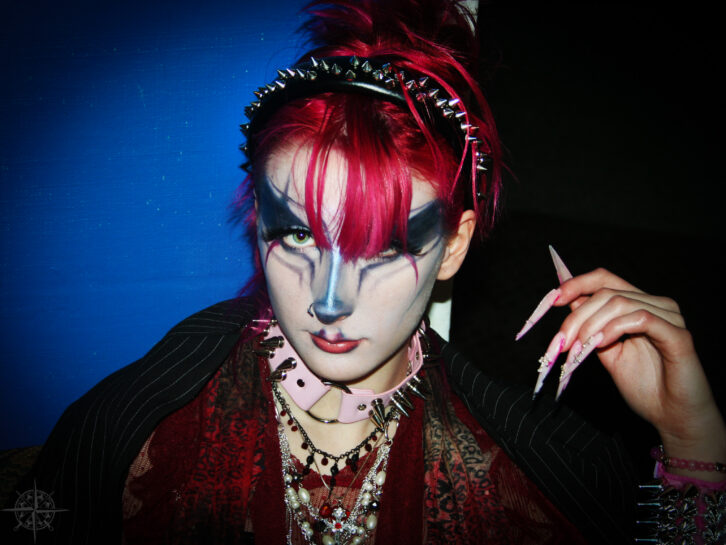 A core passion of mine I discovered at camp was my love of writing. At Wayfinder, stories are all around us, through roleplaying games and improv workshops, but nowhere more than in the Adventure Game, the focal LARP that lies at the core of every event, where the whole camp works to prepare cooperatively to play together. All Adventure Games have a story, an epic quest or a magical world, written by a community member (while many are written by staff, campers are encouraged to submit games as well!). The staff work to bring the gamewriter’s world to life, but through roleplay, the players are the ones who end up telling their own stories. A few months ago, I had the incredible experience of writing Winter Game 2025, Wayfinder’s largest offseason program. I already had a ton of experience writing games before, from shorter series to full day camps, but never one of this scale (with 80+ players), which is why I was intent on pouring as many parts of myself into this story as I could. I wanted this story to reflect my growth and perseverance through challenges within my life, and how the characters in this world could find glimmers of magic together amongst apocalyptic havoc. This game, “THE HOLLOW HUNT”, was a perspective of an alternate reality that seems perpetually gloomy and hopeless, but really was the story of small moments of the things that have brought me through difficulty in my real life, like my favorite music, a love of the rain, a sense of found community, and cherishing memories that we hold dear to our hearts.
Looking back on it, I am so deeply proud of this game, not only of the world I had written but the collective stories told by the participants that they had played out together. Writing these games gives me a medium of storytelling found nowhere else, where I can see the world I laid out come to life before my very eyes, explored and enjoyed by the community who has taught me so much over the years. Writing stories is a true passion of mine, something I am bringing with me outside of camp when I leave for college this year, hoping to further my experiences in playwriting and overall theater. It is a true joy for me to be able to give something back, and create these tales of fantasy and adventure for the next generation of campers, and inspire them to tell their own unique stories as well.
 In 2024, I approached Wayfinder’s then programming director, Jud, about the possibility of using my Make-A-Wish experience to do something with the camp. I was encouraged to explore other ideas first, as “all opportunities the space could offer are already available to you.” Which is a sentiment I found to be quite true; since then, I have gone on to write many games for the camp, and have had amazing learning experiences as an apprentice undergoing staff training. But as the years progressed, I became more and more sure that the thing I really wanted to use my wish for was to empower this place and its community, supporting campers with everything they need to tell their own stories properly. And so this past summer, I approached Jud again, this time clarifying the intent to use my Make-A-Wish for the community of Wayfinder, and not just me within it. The goal is to improve the camp’s accessibility as a creative space, achieving this through two main focal points. First, improving overall camp accessibility with an emphasis on disability support, in hopes of overcoming some of the restrictions the physical nature of the camp imposes. Second, enhancing programming for learning to write Adventure Games, and providing more opportunities for young writers to actually run them. Wayfinder provides such a unique medium for telling stories, an experience no one who seeks it should find themselves unable to engage with.
 Wayfinder, and more so its community, have been at my side both at and away from camp, and I carry this place as part of me wherever I go. I have always felt the need to give back to the camp that I care so deeply for, somewhere where I felt included and seen for who I am, including my conditions. Anytime health complications have arisen, I have been met with thoughtful understanding from the wellness staff, who help me work through the difficulty together while ensuring I remain comfortable. For me, camp is a space where I am not only accepted for who I am, but feel seen and have the difficulties of my conditions respected. Wayfinder has not only been a home to me throughout my childhood, but also an experience that has taught me how to cherish the members of my communities and the worlds we build around us, precious lessons I will carry with me for the rest of my life.
Written by Jasmine, April 2026
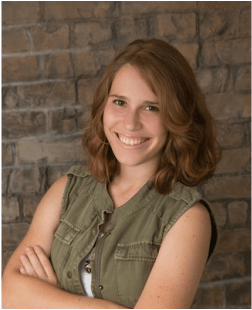 Welcome to our first in a new blog series, “Who are They?” where we interview current staff members to find out a little bit more about why they come back year after year to work for Wayfinder. Today we welcome Maya Ziv to the proverbial hot seat! Just like at camp, this interview was opened with a morning-circle-style question, an open-ended question that gives you a chance to express yourself or tell the community something special about you. Today’s silly question is “What three ingredients mixed into a potion would make you?”
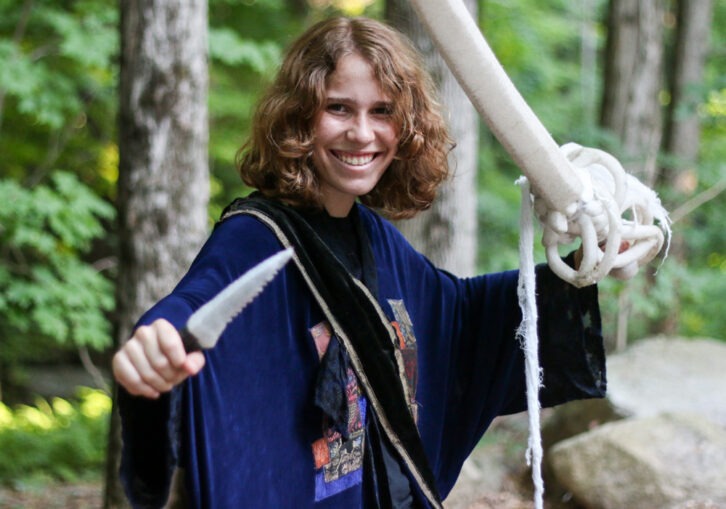 As you may have picked up on, when Maya is not at camp, she is doing computer magic, across the country in CA. “I lead a secret double life as a software engineer…. Much of my year is spent computer programming.” Maya found a love for computer science in college, though it seems that passion might have been built into her programming; her father was a computer scientist and she knows her mathematician grandfather would have been, if computers had been around. After college, Maya tried out a few different fields: “I worked in games for a while, then I worked in cybersecurity, now I work at a civic technology company…, basically making tools for people who work at local government agencies to make their purchasing easier when they are buying, you know, road paving equipment or disaster relief supplies or like helping communities to recover from hurricanes, whatever services they’re providing for you.” Maya really enjoys being able to serve a good cause. “I feel very lucky to be able to prioritize working on a mission that I really believe in and at a company that I think is doing good in the world and to have that be something that guides my career.”
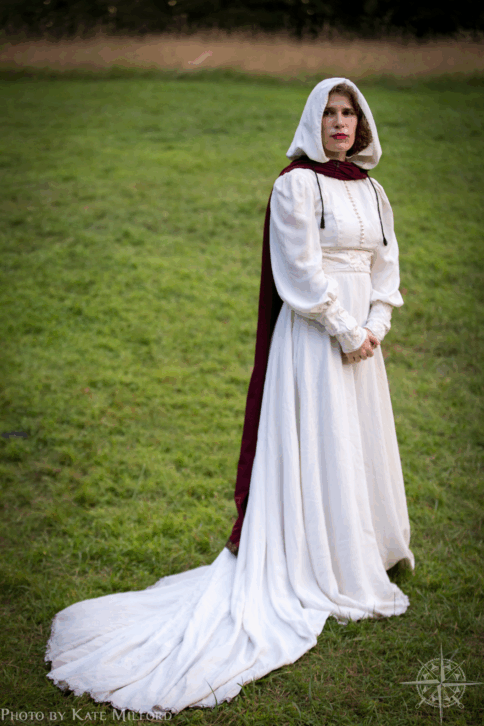 Besides practical career skills, Maya has also taken our community practices out into the world, like our golden rule: “respect others and their feelings.” For Maya, these have been words to live by. “It’s a life philosophy, something I hold very dear to my heart. It matters to me a lot that I move through the world in a way that is caring and that makes space for all people. I feel so very lucky to live as fully as I do at camp and then try to bring that to spaces I inhabit elsewhere in the world.” This philosophy has become important in her career too. She says, “I think it’s an ideal that a lot of companies strive for but is very difficult to achieve because it requires a level of trust. But it is necessary, because we are people in the world and you cannot have only the work parts of yourself at work. That’s just not how it works.” Maya strives to create space both at work and in all her communities for people to build that trust, openness, and respect. “It’s nice to be a part of shaping space because at the end of the day, we’re all people. So it matters.”
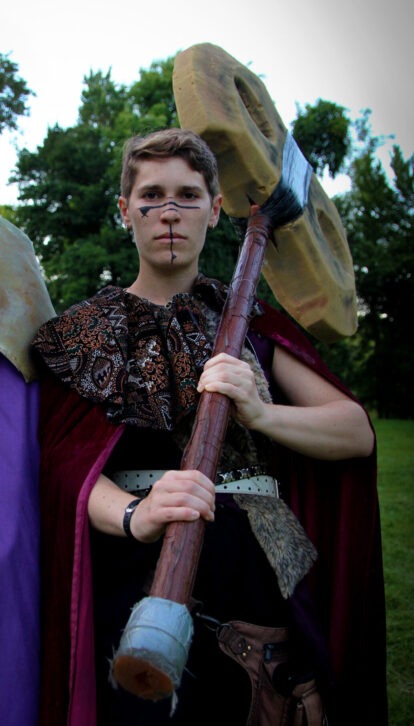 Maya and so many others keep coming back for so many reasons: community, adventure, a space to be free, and of course, the magic! She has found all of those things and more in our Adventure Games. Maya has so many amazing memories from different Games, from her first horror game, getting attacked with our play-safe chain saw, to being the safety person when another staff member lit their hand on fire for an in-Game ritual (with proper precautions). “Oh, it was the coolest thing I’ve ever seen, and I held the bowl of water that she dunked it in at the end, which I took very seriously as a 19 year old. As you should, that was real fire. On her real hand. It was blue. It was crazy – watching every child’s mouth drop as they were like, ‘Oh, magic is real.’ “ And that is what we love about camp, finding out that magic is real. It might look different than we imagine it as children but if you are able to find magic as an adult, then life can become truly joyous.
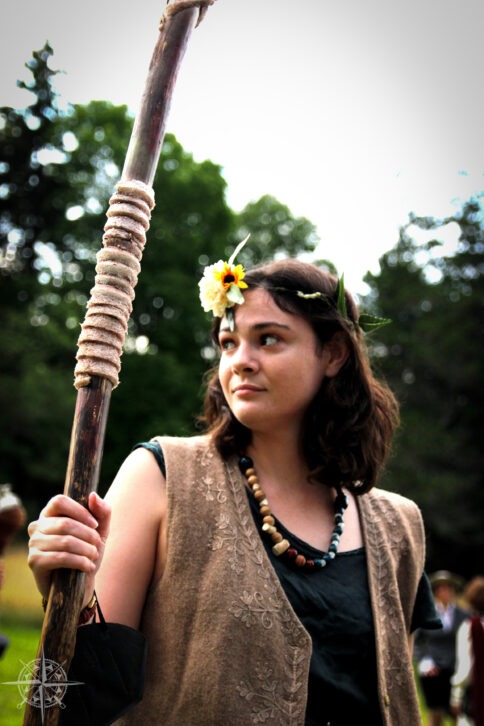 When I first interviewed for the Wayfinder Experience, before I knew much about it or LARP at all, one of the questions I was asked was how would I feel entering into a space that tended to be tight-knit and full of history well known to its members. Most Wayfinder staff grew up as Wayfinder campers and so many of them had already grown close. I answered that I was excited for it. I love to join a well-oiled community and I find myself slipping into places pretty easily, even when I have little context for them.
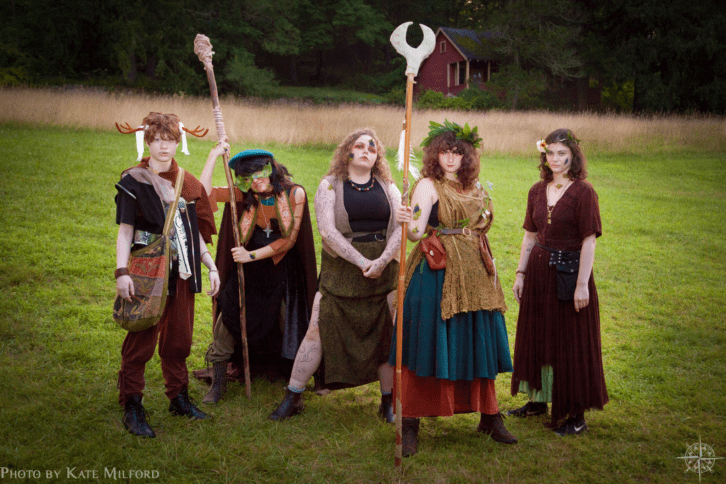 For me, the first way I learned to take up space was in theater. I did community theater as a child and grew up in a tightly knit community, much like Wayfinder. Tapping into the edges of myself, seeing how far I can stretch my presence and then seeing how I might draw it back in to allow others to shine was an important lesson for me to learn. Not coincidentally, this lines up with what we teach kids in workshops at camp, how we invite kids to play with each other and learn how to walk through life are one and the same.
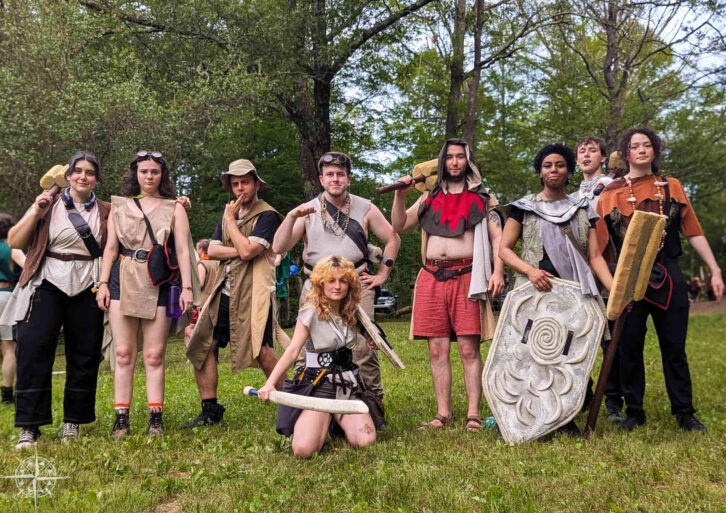 Making friends is hard work but it’s good work if you can get it. It’s exactly the kind of work Wayfinder asks of its community members- to be open and brave and kind even when the rest of the world is not that way. It asks for a commitment to your community and yourself, making it clear that you are part of community care. I have always heard staff stress that the environment we build at camp can be brought outside of camp to the rest of the world. I took this advice and set off running, introducing my dnd group to Wayfinder where they found places for themselves too. Additionally, I am now close enough to some staff members to consider them close friends and a few even attended my wedding. The campers that attend Wayfinder know who I am and consider me a role model. These relationships we have cultivated are tended to by the members of the Wayfinder community and as I have grown within it,my confidence and identity have grown with me. Wayfinder was the first place where I played with my pronouns, trying on new ones, feeling them wrap around me and dress me up until I felt just right. It is where I declared love for people I had just met and people I have known for years. There’s a Wayfinder overnight summer camp tradition called Bardic Circle, where staff and campers perform music and plays and comedy routines. Every year I read the poem I wrote my first summer that finishes with:
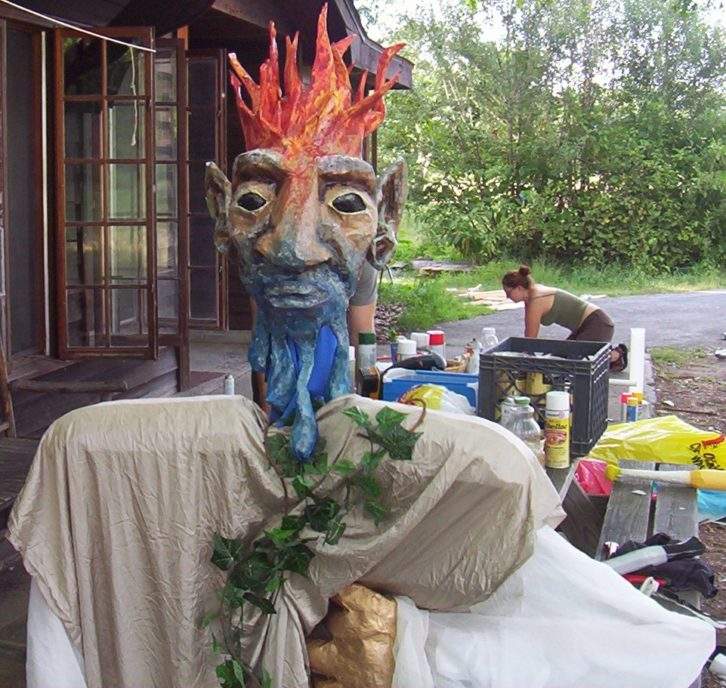 Wayfinder grew off a similar organization called Adventure Game Theater, which has since been absorbed into Wayfinder. Our programming grew directly from the systems and work that AGT did. Many parts of our system were built around DND spells and other systems that people were familiar with, but as with many LARPs our systems have evolved to reflect the people in the community and the ways in which we play our games. The Adventure Game as a LARP system started in 1986 (before Magic the Gathering for some nerd street cred) and has been being updated, tweaked, and adapted ever since. There is no one person who created our system (which contains a base system of 5 classes and over 100 abilities, with other auxiliary powers and classes available for use in less standard game settings and several variations on improv magic instead of our class based system). There have been a number of people who have worked on it over the years. The current system that is in play was largely developed and updated by Conor Gillespie, Griffin Johnston, Jack Covell, and Brennan Lee Mulligan in the mid aughts, but it has since been updated by our administrative staff and is undergoing regular updates and reworkings to keep it feeling fresh and in line with the way that games our played today!
 The swords are central to what we do. It is the easiest way to grasp LARP for an outsider. It can be hard to take on a character, to tell a story, to invest in the small details of a world that isn’t your own, but it is very easy to understand that getting hit with a sword is bad and getting a chance to swordfight is fun. On top of the access to different types of play, swords are a hugely appealing thing to many participants (new, returning, young, and old). There aren’t that many chances to safely hit each other with things or to simulate battle. As purely an experience, it’s a fun and fairly unique one (not a ton of drop in LARPs that are easily accessible for kids). For many of us who want to be active but are not necessarily the most athletic, it provides the chance to get to play in some athletics with some leveling in the reality of there’s always the chance to fight your way out. Add on top the ability to scream and die together, live out the epic battles you’ve seen or read in so many books, movies, and video games, and the list of reasons to love swords stretches on almost endlessly.
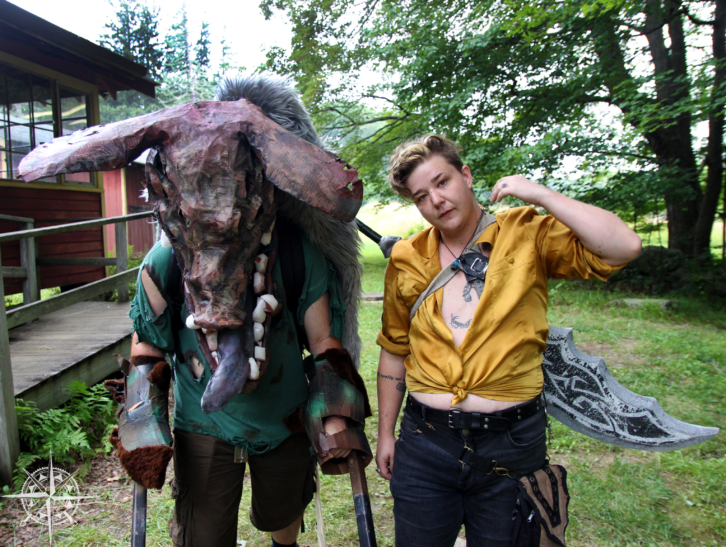 Campaign play allows us to spend more time with a particular character and story line, to carry our characters forward through a series of events and construct singular narratives around the different stories they find themselves at the center of. Characters always provide us a reflection of ourselves, a vision into another way that we could be and interact with those around us. Returning to a character can feel like coming home to yourself. Characters can share a lot with us, they may be good, they may be evil, but whoever they are, the distance they provide from our everyday selves brings a newness into the body that can be very welcoming. The longer you play as a particular character, the more of that character’s life you will hold in your memory.
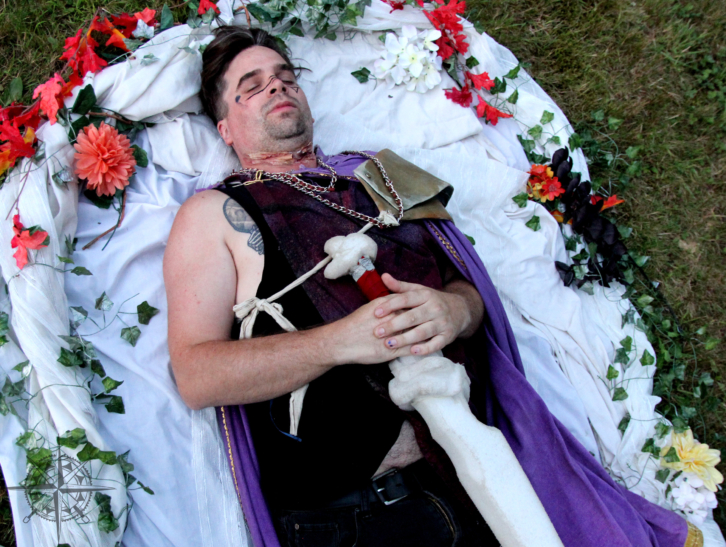
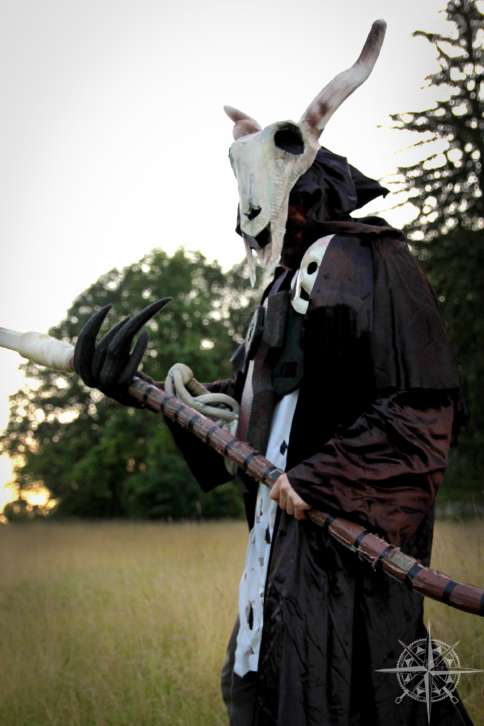 Last summer we returned to having linked Campaign style Adventure Games as a part of our summer offerings. Over the course of two weeks of camp players were introduced to a world that our staff had collaborated to build the mythology of. People built characters that had to face off against an ancient evil, a lich who had found a way to once again crawl out of death. In our first week characters fought an increasingly desperate battle to stem the tides of undeath, to hold this evil back before it swallowed the world. They were successful, but at the price of a large number of their own, including some heroes they had grown to care about. In the second week we opened with a funeral for one of those characters who had passed. Campers and staff alike gave impromptu elegies that brought a solemn warmth to the scene, and made it all the more upsetting when the character rose again possessed by the lich. Playing in the same world over the course of multiple weeks, made everything feel more familiar, more lived in. Campers were able to share stories and lore with one another. The world became truly collaborative.
 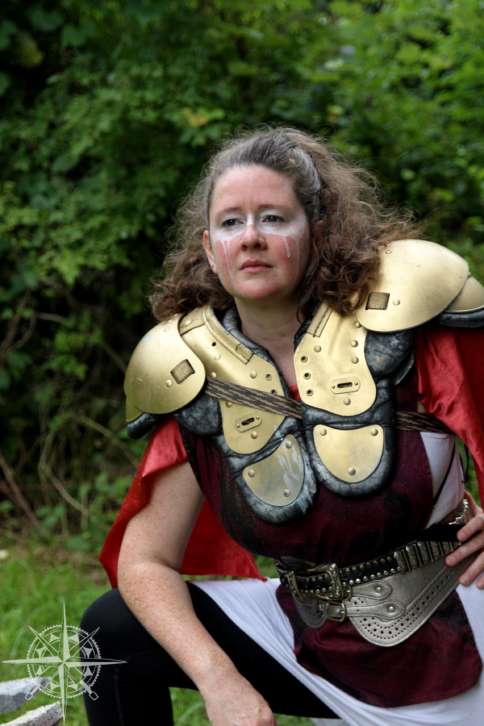 After the summer we had two opportunities to return to our campaign world. At our Adult Retreat we played a prequel that took place in the same world, giving a perspective to characters and storylines from the summer. Many of our staff, having worked over the summer, found themselves getting the chance to play as PCs in earlier storylines that tied into their experiences over the summer. A number of them found this deepened their experience, they already felt connected to the mythology and the chance to build into that world in its early days provided a unique LARP experience for them.
  This summer we will be having two more linked games. Building out these games is a fun design challenge. We have to craft two games that are stand alone stories, but played together they show a full story arc, and as with all of our Adventure Games, the storyline that we play wraps up, the campaign does not stretch forward forever. It is a hallmark of our Adventure Games that we build these worlds and these characters, inhabit them, and continue into the next story. This summer at our first two weeks of Overnight Camp we will be playing linked games and hope to see you there! What will you build with us? Where does your story lead?
 Always Coming Back Home To You
 Due to the setup of our community around a summer camp, there is always going to be some change in the people who are attending. People’s lives move forward. They go to college. They get jobs. They move on to whatever the world holds next for them. Spending summers at camp you get used to the rotating nature of the people around you. Every time someone new comes to camp it’s a chance to bring someone new into the fold. It’s always exciting to see what they bring into the space with them. New games. New ideas. There’s also, almost guaranteed, to be a friend who has been long absent. Someone who wasn’t able to be at camp for whatever reasons, or you two just haven’t been at the same weeks. Every camp is a chance to reenter these friendships. The function of being a summer camp means that the majority of the people at camp will not see each other maybe nine months out of the year. The friendships we have suspend in time, they tie to the space we hold at camp. It’s why it’s so easy for us to come and go in each other’s lives, to maintain relevance, as Marika put it so well a few weeks ago. We have grown use to coming home to each other.
 I’ve lived in six states and three time zones. I’ve told myself more springs than I’d like to admit that the coming summer would be my last one at camp, that it was time for me to grow up and move on to a new home. In 2014 I didn’t go to camp for the first time since I started in 2003. The year that followed was one of the hardest, most isolated of my life. There were a lot of external strains that led to this throughout the year as well, but I would be lying if I didn’t notice the weight of not getting to come home to camp and be me. Not having the time to put my stress aside and sit in a circle and fall asleep in the grass when I’m probably not supposed to (OK I’m definitely not supposed to and am probably supposed to be running the circle). Camp is my home. Who knows how long we get to call any one particular place home? If you get the chance to, come back. We miss you.
 Recently I’ve spent a lot of time thinking about play and what it is. I’ve been taking a class on play theory (one of many reasons my writing of this blog has lagged so heavily) in which we have been looking at different definitions of play that people have had throughout the years and the implications of each one. Wayfinder is the reason I signed up for the course. Seeing as we talk about and engage in play so much within our community, I wanted to get an idea of what the broader view on the topic was. As we’ve progressed I’ve also been looking at my own beliefs as to what play is, what role it holds in this community, and what play has done for me. I’ll probably write more of the personal responses to play as time passes but for right now I want to look at some of the ways play applies to camp at large.

 Closing circle at camp almost always includes a specific message and call to action: the things we do at camp can be brought out into your regular life. This isn’t to say that you’re going to get everyone you meet to break out into LARPing games at school or in your day to day lives, but instead that much of the work we do on ourselves at camp can be applied to ourselves outside. Personally the comfort and confidence I have found in myself through Wayfinder has allowed me to navigate social situations for the past 14 years of my life. It’s taken a combination of the different types of skills and knowledge I gained through camp in order to be able to cultivate those qualities in myself.
 While there has been a lot of discussion of “creating space” on this blog (and generally is at any Wayfinder event), little focus has been given to what kind of space Wayfinder is to begin with. It may seem kind of strange to try and diagnose a space which has no connection to a specific location (our office and storage facility notwithstanding, there is no one place which contains the Wayfinder Experience), but for the purpose of discussion space refers to whatever space we occupy together as a community and not the land itself. Wayfinder exists as a transformational space. The nature of this movement, combined with the variable make up of community members (both staff and participants) at any event, and the type of personal, introspective work we do allows transformations from community members to go unquestioned.