





Love is a huge part of the human experience, and yet many people only think of it in terms of the romantic and familial varieties. For many young people, the first time they hear about or sometimes feel platonic love is at camp. The joy that comes from experiencing this new type of love can expand their hearts and minds as they learn that it can be ok to show vulnerability and affection to those around them. At camp, these young people are also given the words to describe a facet of themselves that has always been a part of them but that they didn’t know how to express before. All of this is a beautiful thing that happens so naturally in our camp environment.
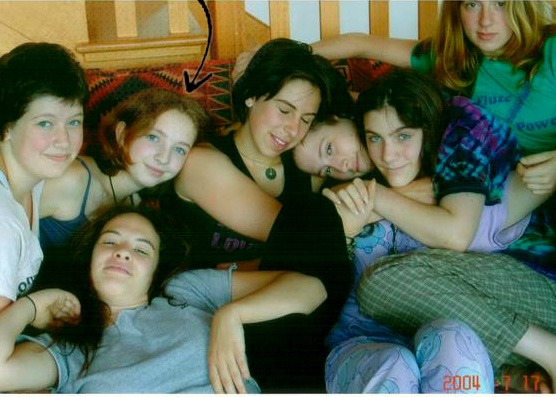 I, myself, was one of those teens in 2003. I felt everything so deeply, and I still do. I didn’t have the words or any clear examples of how to express my love for my friends. On my first day, which I can still see so clearly, I saw people hugging and holding hands and thought, they must be dating. As I sat down for the Reacting to Magic workshop (which was on the first day back then), an energetic and playful teen came over to me and put his head in my lap. Though surprised, I relaxed into this new experience and found such comfort in putting an arm around this joyous person. As the camp went on I saw more people engaging in behaviors like this. And as I went through the community building workshops and joined in the cuddle piles I felt more like myself than I ever had before. I felt like I was allowed to have feelings – positive, platonic, joyful feelings – which were all new to me. To this day, over 20 years later, that young person who put his head in my lap is still one of my closest friends. I still get filled with boundless joy whenever I get to spend time with my closest camp friends from “back in the day.” At times, I have even been brought to happy tears from remembering the magical feeling of being at camp all those years ago. I still care so deeply for and about these people who have become my extended family. Whole hearted joy is a transcendent feeling, one which happens often at camp. For me, it is the feeling of genuine love, and I am a better person for having been opened up to this form or expression.
I know others share these experiences, especially our current campers, since they are actively developing these friendships. I thought they might have words to help define this overwhelming feeling. How and what about Wayfinder Overnight camps make this deep platonic love so palpable? As I spoke to a number of young campers and apprentices it became clear that both the camp environment as well as explicit modeling of platonic love and affection played a role in highlighting this special type of experience. At first this can seem odd, to see people being so at ease and physically comfortable with each other. The accepting nature of the camp environment and sheer excitement for being around each other is palpable and infectious to new community members.
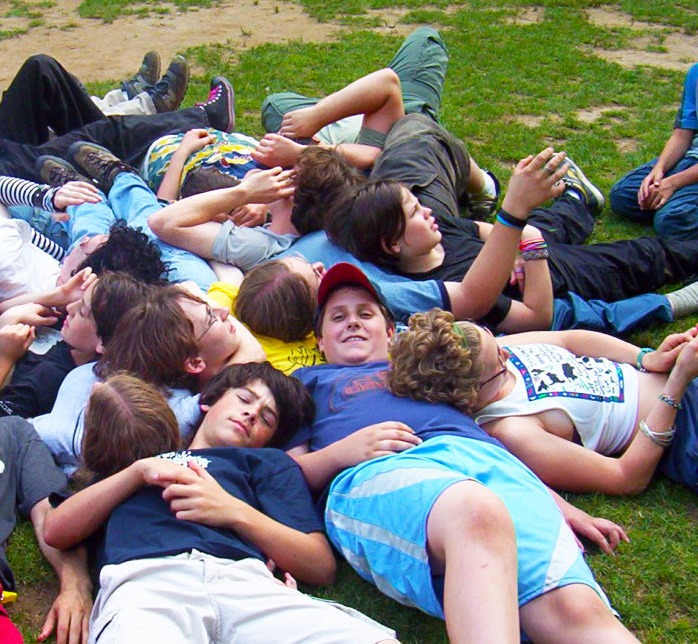 Eloise, an apprentice, reflects that when she first saw a”puppy” pile she thought “that’s weird.” A puppy pile is simply when a group of people (at camp its teenage campers) put their heads in each other’s laps and maybe hold hands or scratch each other’s heads while hanging out. This is an informal opt-in activity that usually happens during free time or workshops where there is a lot of sitting and listening. This form of physical closeness is just another way young people get to practice trust by sharing physical and emotional closeness with each other. According to Psychology Today this type of physical closeness can be very beneficial in a person’s life,“whether it’s a hug or a simple handhold, your body releases oxytocin, which fosters feelings of closeness, trust, and bonding between people.” Research has shown that higher levels of oxytocin are linked to reduced stress and increased feelings of safety and emotional closeness, which I believe everyone can benefit from. After a few days at camp Eloise came to the conclusion “it’s ok to do these things.” Which led her to joining in and finding great benefit from it. For me puppy piles felt like a missing puzzle piece for expressing the great amount of care I had for my friends but had never known how to show. The way to feel close and connect as a group with no expectations beyond being comfy and chatting. Being at camp Eloise finally felt comfortable expressing platonic love with friends and thought there are a few important components such as “it’s not judgmental,” but rather it is wholesome and unconditional. She goes on to say that it is easy to find things to bond over with people at camp and that she “doesn’t feel like I have to hold back. I can just say ‘OMG that was so funny! I love you!”’
Being able to say ‘I love you’ to a friend as simply the expression of your joy is both beautiful and radical. In my life, I have met many people who reserve those words for family and romantic partners alone- but life has so many more ways to share and show joy, love and connection with all people. One of the hardest forms of that for me over the years has been finding true unconditional love for myself. I think many people struggle with it, and our teens are no exception. And sometimes the path to loving ourselves is learning how to love in the first place. Practicing with friends and community is the perfect way to start.
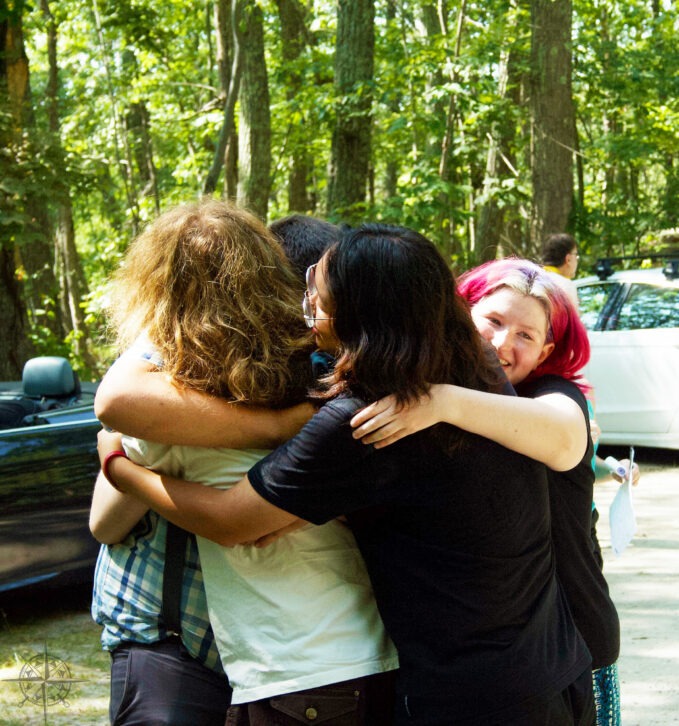 Phantom, another apprentice, was bullied at the only other overnight camp they went to, and it left them very nervous to try another one. However, by the end of the first day they were over that because they found out “Wayfinder Overnight camps are a place where everyone loves each other.” Now they can see the effects of this platonic love with their friends from camp in everyday life. “We became more present with each other.” The group shows their affection through small acts of physical closeness like putting an arm around each other or holding hands without fear that it is unwelcome or means something more. Because they know that for the group it is a wonderful and normal way to show affection. Phantom believes platonic love is “necessary and sweet,” and goes on to say “If you don’t love [your friends] then why have them?”
I believe that these friendships help us define ourselves and give us practice in how to love. Sure, it might get messy and complicated at times navigating all the feelings along the way. But when given the tools to communicate through the messy moments and time to grow from all the lessons, you can come out of it with life long friends who become like your family. However, finding your people doesn’t always happen overnight, it takes the right mix of things even at camp.
Thea, upon attending camp, could feel that these were their people, though the particular ones that they would become closest too didn’t make themselves known until Thea’s second year when they started playing DnD online with a group of camp friends. “You have to want to hang out” in order to build these deep friendships. Friendships feel best when they are “mutual, comfortable and affectionate.” Going beyond that, Thea and I both reflected that there is also an enduring love we all share for the space we make and build together at Wayfinder. The space we build together, each week, is held up by having common goals and values. “We all have this shared goal so we all come together.” That is what unites us and helps us find understanding for everyone in our space even when we might not feel a personal connection to everyone or each activity.
 “Wayfinder is an intense place” says camper Elias, “at Wayfinder it feels like everyone is living with their feelings out loud and it can be extreme.” He is not wrong. When given the space to fully express yourself, like we do at camp, big emotions and personality come out and are often welcomed – it is part of the magic. But sometimes those big energies can cross others’ comfort zones, and that is where the stewardship of our staff takes the reins to ensure a supportive environment for all. We don’t shy away from hard conversation and making clear boundaries. We practice setting group boundaries and navigating through them, which can create an environment of safety that allows campers to expand their comfort zones. That is one of the ways we work with everyone to understand the diversity of need in our shared space and feel comfortable, because “you can be frustrated with a part of the camp or a person and still love it.” Being open to understanding and the ability to have compassion is how we often grow as people.
We have found that the community building activities we do and the Adventure Games we play help expedite making friendships, making connections and forming trust that may otherwise take years. Elias says “Wayfinder has the building blocks for making deep friendships because of the culture at camp, the environment teaches people trust.” I know that is true for me, as a camper I gained more trust in myself, as well as trust in others to help pick me back up after mistakes. I love when I get to work events now, because I get reminded of this radical form of trust and continue to practice it in the “real” world.
The magic of camp is in this ability to find safety in being vulnerable, in the trust you learn to place in others as well as in yourself, and in love: deep, mutual, comfortable love for those closest to you and those who are in community with you. This magic is powerful. And, when and if you are able to maintain it, you can give it to others and spark this love in them too.
Written Feb. 2026 by Trine Boode-Petersen